
Medical Waste
 For everyone’s safety, sharps must be placed in a Safe Sharps container and handled properly.Never put needles, syringes, or lancets in garbage or recycling bags, plastic bottles, down the toilet, or burn them. How to dispose safely:
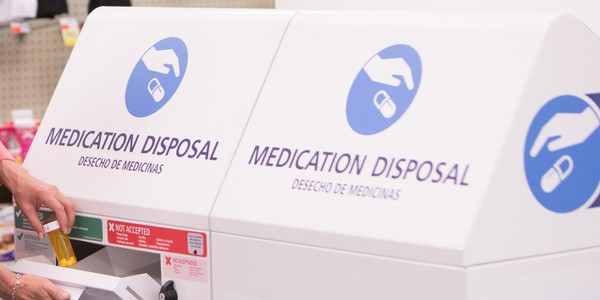 Don’t flush or toss your medications!
Nova Scotia’s Medication Disposal Program lets you return unwanted or expired medications to any pharmacy for free and safe disposal. Visit the Pharmacy Association of Nova Scotia (PANS) for details.
Pharmacies accept:
- All prescription and over-the-counter medications
- Narcotics and controlled substances
Improper disposal can harm the environment, compromise privacy, and increase risks like medication errors or misuse.
Not accepted:
- Sharps, needles, syringes
- Cosmetics
- Empty pill bottles
Note: This program is not for commercial or institutional sources (e.g., doctors’ offices, vet clinics, long-term care facilities, workplaces).
Household Hazardous Waste (HHW)
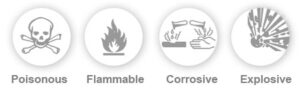
A product is considered household hazardous waste (HHW) if it displays hazard symbols or words like Danger, Poison, Caution, or Warning. These items cannot go in regular garbage and require special disposal.
Residential HHW can be dropped off free of charge at the permanent HHW depots located at the Lawrencetown and Kentville management centres.
Residential waste only — no commercial materials accepted.
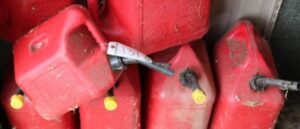 Gasoline and diesel can be disposed of for free at the transfer station under Household Hazardous Waste (HHW). Maximum 5 gallon container size. Containers must be left behind.
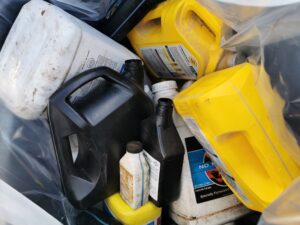 A new program allows safe disposal and recycling of used oil, antifreeze, oil filters, containers, and aerosol cans, preventing environmental harm from landfills. Valley Waste accepts oil and automotive fluids in containers up to 20 litres. Find your nearest collection facility!
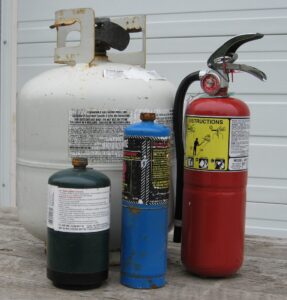 Propane Cylinders (up to 30lb): Propane cylinders up to 30lb can be returned to some propane retailers or the Valley Waste Management Centres.
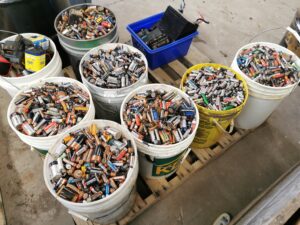
Some lithium batteries can be flammable. Recycle them within six months, ensuring they are bagged or taped. You can use our locator to find the nearest drop-off site.
Visit Recycle Your Batteries, Canada! for more information on safely storing and disposing your batteries. Help keep batteries out of landfills!

 If you are buying a new cellphone don’t forget to
 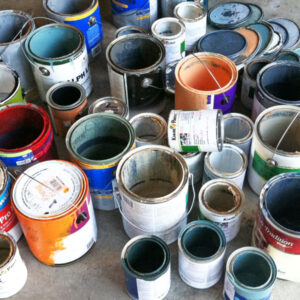 The Nova Scotia paint recycling program accepts residential alkyd, latex, and aerosol paints at various recycling locations, including Management Centres, retailers, and some local ENVIRO-DEPOT™ may accept paint free of charge. For full details of accepted products, please visit the Nova Scotia paint program page.
 Aerosol cans that are empty (i.e., no product or propellant remains in the can) may be disposed of in the trash. Cans with any product or propellant remaining inside can be brought in for free to the transfer station for proper disposal through our HHW program.
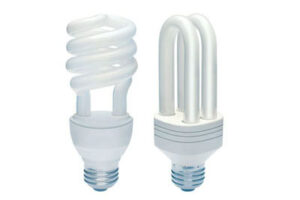 Bring your CFL Bulbs or fluorescent bulbs to the Management Centre for proper disposal.
 Improperly disposed pool chemicals are dangerous, causing skin irritation, releasing toxic gases, and potentially causing explosions or fires in garbage trucks. They can also contaminate soil and groundwater. Bring them to transfer stations for safe disposal through our HHW program.
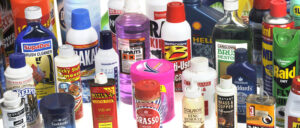
“Empty” containers may contain hazardous corrosive residues. Always treat them as corrosive waste and never reuse them. Do not dispose of corrosives down sinks or drains. Follow the manufacturer’s disposal directions or bring them to our transfer station for safe disposal.
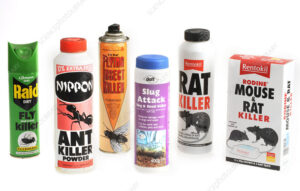
Household pesticides and herbicides are classified as Household Hazardous Waste and can be disposed of for free at the transfer station. For commercial quantities, contact the supplier or a local hazardous waste company.

Cleanfarms is a non-profit environmental stewardship organization. They work collaboratively with their members, partner agencies, and the government to ensure that Canadian farmers can actively contribute to a healthy environment and a sustainable future. Their programs create meaningful change and offer a tangible way to address agricultural waste management and resource recovery in the community. Check their website for more information on what is accepted in Nova Scotia.
Automotive

Nova Scotians can return up to four regulated used tires for recycling to any tire retailer in the province, during their regular business hours – free of charge.
When you are purchasing new tires, or putting on winter/summer tires, simply leave any unwanted or worn-out tires at the tire retailer. For more information click HERE or download a brochure.
Please note: ATV and Tractor Tires are NOT part of the program and can be brought into the transfer stations for disposal for a fee.
 Nova Scotians can return used bicycle tires for recycling to any of the bicycle retail & repair shops on our Bicycle Tire Recycling Drop-Off Locations list. Tires must be dropped off during regular business hours. The Bicycle Tire Recycling Program is voluntary and free of charge—Divert NS covers the costs of running this program.
The program is FREE for bicycle tire retailers, FREE for consumers, and applies to all bicycle tires and tubes except tubular tires, which are glued to special rims.
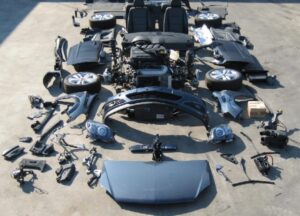
Automotive Recyclers Association of Atlantic Canada
Formed in 1972 as the Maritime Auto Wreckers Association, the Automotive Recyclers Association of Atlantic Canada has grown in to a robust industry association representing professional auto recyclers in the four Atlantic Provinces – New Brunswick, Nova Scotia, Prince Edward Island and Newfoundland.
Auto recycling is much more than making sure your vehicle is depolluted properly. It also makes sure that the Vehicle Information Number (VIN) is properly managed, and quality Green Recycled Parts are available to insurers, repairers, dealers and the motoring public.